
How to Start a Fundraiser: The Complete Step-by-Step Guide
Learn how to start a fundraiser, choose the right format, build a donation page, promote your campaign, and follow up with donors.

Key Takeaways
• Starting a fundraiser begins with a clear mission, specific goal, and simple plan for reaching supporters.
• The best fundraiser type depends on your audience, timeline, budget, and team capacity.
• A strong fundraising page should clearly explain the need, show the impact of each gift, and make donating easy.
• After the fundraiser ends, thanking donors and sharing results helps build stronger long-term support.
Starting a fundraiser can feel overwhelming, but it doesn't have to be. Whether you're raising money for a nonprofit, a community project, or a cause close to your heart, the process follows a clear, repeatable path: define your mission, choose the right format, build your team, tell a compelling story, and steward every donor relationship from first gift to lifelong supporter.
This guide walks you through ten proven steps to plan, launch, and follow up after a fundraiser, without making the process more complicated than it needs to be.
Step 1 – Define Your Mission and Your "Why"
Every successful fundraiser starts with a crystal-clear answer to one question: Why does this matter?
Your mission is the emotional and logical engine behind every donation. It's the reason someone stops scrolling, reads your story, and decides to give. Many first-time donors do not give again unless they feel connected to the cause and understand the impact of their gift.
Connect the cause to donor motivation
Donors give for a mix of reasons: altruism, social identity, personal experience, tax benefits, and community belonging. Your job in this first step is to articulate your mission in a way that bridges your organization's need with the donor's desire to make a difference.
Start by answering these foundational questions:
- What specific problem are you solving? Avoid vague language. "Ending hunger in our county" is stronger than "helping people."
- Who benefits directly? Name the population, community, or ecosystem you serve.
- What will change if you reach your goal? Paint a concrete picture of impact: meals served, students tutored, acres restored.
- Why now? Urgency drives action. Connect your fundraiser to a timely need, a matching-gift deadline, or a seasonal opportunity.
Write your mission as a single sentence you can repeat everywhere: your fundraising page, your emails, your social posts, and your thank-you notes. This sentence becomes your North Star for every decision that follows.
Quantify the impact
People are more likely to give when they can see exactly what their dollars accomplish. Instead of asking for "$50,000 for our program," frame it as "$50 provides a week of after-school tutoring for one student." As you write your campaign copy, think about what your donors care about most and connect your ask to that motivation.
Step 2 – Choose Your Fundraiser Type
Once your mission is locked in, the next decision is format. Choose the fundraiser format that fits your goal, audience, and capacity.
Common options include:
- Online campaigns: Best for fast launches, emergency needs, annual funds, and Giving Tuesday.
- Peer-to-peer fundraisers: Best when supporters are willing to raise money from their own networks.
- Events:: Best for community connection, sponsorships, ticketing, and in-person engagement.
- Recurring giving programs: Best for building steady monthly support.
Many nonprofits combine formats, like running an online campaign with a recurring gift option or adding peer-to-peer fundraising to an event.
Step 3 – Set a Budget and Timeline with Realistic Milestones
A clear budget and timeline help your team stay realistic, organized, and accountable.
Build your budget
Start by listing the costs you expect, including platform fees, payment processing, marketing, event expenses, staff or contractor time, donor recognition, and any permits or supplies.
Then set a fundraising goal that is ambitious but attainable. Look at past campaigns, your current audience, and any matching gifts or sponsors that could help.
For the timeline, keep it simple:
- Plan and build the campaign
- Share it with your closest supporters
- Launch publicly
- Send a mid-campaign update
- Make a final reminder
- Thank donors and share results
Step 4 – Build Your Team and Recruit Volunteers
You can't run a great fundraiser alone. Even a lean online campaign benefits from a small team with clearly defined roles. Decide who will manage the campaign page, donor questions, email and social promotion, sponsor outreach, and thank-you messages. In a smaller organization, one person may own several of these tasks. The important part is making sure nothing is left vague.
Helpful roles to assign:
- Campaign lead
- Content or storytelling lead
- Email and social lead
- Donor follow-up lead
- Event or volunteer lead, if needed
If volunteers are involved, give them a specific job, simple instructions, and ready-to-use language they can share with their own networks.
Step 5 – Line Up Sponsors and Matching Gifts
Sponsors and matching gifts can help your fundraiser go further.
Start with companies that already have a connection to your cause, such as local businesses, employers of your donors or volunteers, and companies that support your community.
When pitching sponsors, keep the ask simple:
- Explain the mission
- Show who the sponsorship will reach
- Offer clear sponsorship levels
- Include the benefits they receive
- Make it easy to say yes
Matching gifts are another important opportunity. Many donors do not know their employer may match their gift. Add a matching gift prompt to your donation page so donors can check while they are already giving.
Step 6 – Craft Your Story and Create Your Fundraising Page
This is where your mission comes to life. Your fundraising page is where donors decide whether to give, so it needs to be clear, simple, and easy to use.
Tell a story, not a pitch
The most effective fundraising pages ask four simple questions:
- The problem – What's at stake? Who's affected?
- The solution – What is your organization doing about it?
- The donor's role – How does giving make the solution possible?
- The impact – What will change because of this gift?
Keep the page focused on one clear call to action: donate.
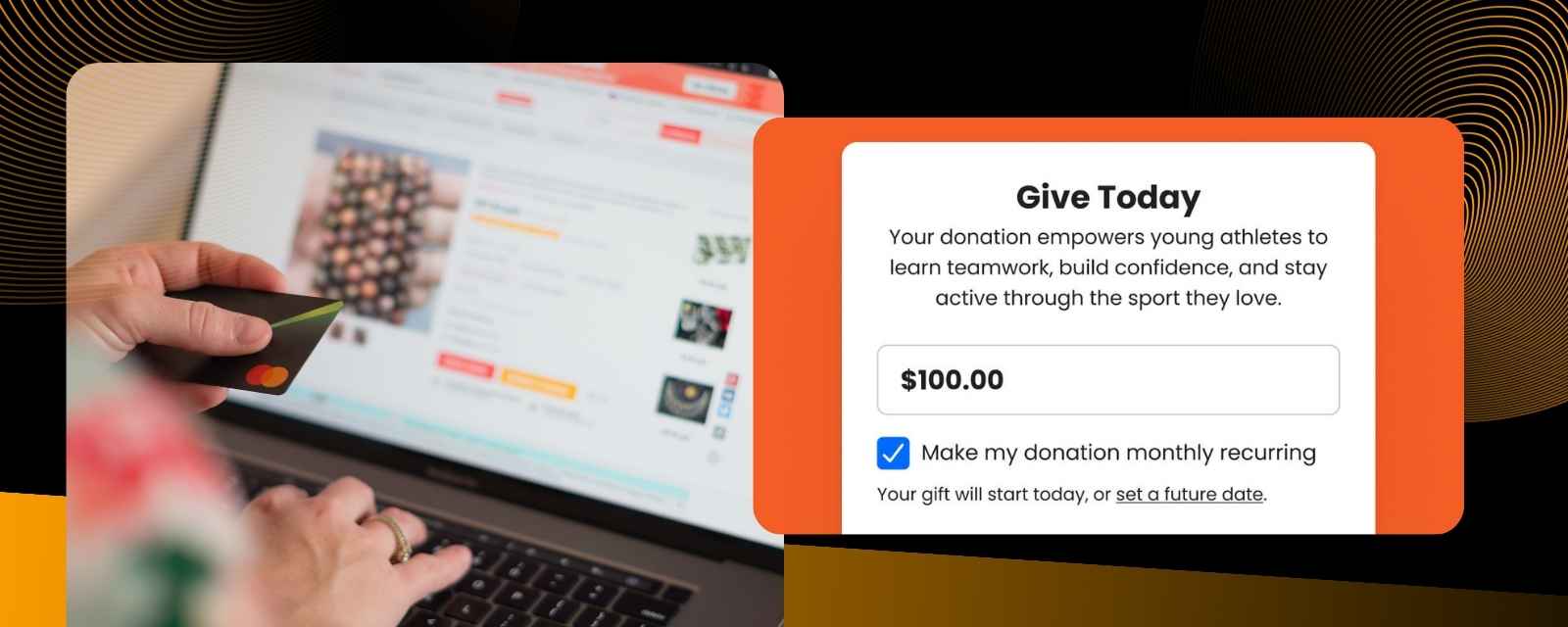
GivingFuel’s donation page builder helps nonprofits create branded, mobile-friendly pages with suggested giving amounts, recurring donation options, matching gift prompts, photos, videos, and progress tools connected to donor records.
Step 7 – Set Up Payment Processing and Giving Options
Once your page is ready, make it easy for donors to complete their gift.
Offer giving options that fit how people actually donate:
- Credit and debit cards – Still the most common online payment method.
- ACH / bank transfers – Lower processing fees and preferred by many recurring donors.
- Digital wallets – Apple Pay, Google Pay, and PayPal reduce friction on mobile.
- Text-to-give – Lets donors give by sending a keyword to a short code, perfect for events and in-person appeals. GivingFuel's text-to-give feature makes setup simple and integrates directly with your donation page and CRM.
- Donor-advised funds (DAFs) – A growing source of charitable giving, especially among high-net-worth donors.
Understand processing fees
Also review the full cost of accepting donations. Look at processing fees, platform fees, monthly costs, and whether donors can cover fees.
The right platform should keep donation pages, payment processing, donor records, events, and follow-up connected, so your team is not managing the campaign across several disconnected tools.
When choosing a fundraising platform, look for one that keeps your donation page, payment processing, donor records, event tools, and email follow-up connected. That makes it easier to thank donors, track results, and manage the campaign without exporting data between multiple systems.
Step 8 – Build Your Marketing and Promotion Plan
A fundraiser needs a clear promotion plan so people know how to support it.
Start with audiences most likely to respond
The most cost-effective donations come from people who already know and trust you. Prioritize outreach in this order:
- Existing donors – They've given before. A personalized ask referencing their past support is your highest-ROI message.
- Email subscribers – They've opted in to hear from you. Use segmented email campaigns to deliver the right message to the right audience.
- Social media followers – They've raised their hand by following you. Use organic posts, stories, and live video to build excitement.
- Board and volunteer networks – Equip them with shareable content and personal page links.
- Cold audiences – Paid social ads, press outreach, and influencer partnerships extend your reach to new potential supporters.
For supporters who haven't given in a while, a well-timed fundraiser launch can be the perfect re-engagement moment. Our lapsed donor recovery guide outlines proven strategies for winning back inactive supporters.
Build an email sequence
Email remains the highest-converting channel for online fundraising. Plan a sequence that maps to your campaign timeline.
GivingFuel's email automation lets you build these sequences once and trigger them automatically based on donor actions like first gift, repeat gift, page visit without giving, and more.
Social media strategy
Social media amplifies your campaign, but only if you're consistent and strategic. Plan 3–5 posts per week during your campaign window. Mix content types:
- Story posts – Beneficiary spotlights, behind-the-scenes looks, volunteer features
- Progress updates – Thermometer graphics, milestone celebrations, donor shout-outs
- Direct asks – Clear, specific calls to action with a link to your donation page
- User-generated content – Repost peer fundraiser updates, donor testimonials, event photos
Use platform-native features: Instagram Stories, Facebook Live, LinkedIn articles, to maximize reach. And always include a direct link to your fundraising page.
Paid promotion
If your budget allows, even a modest paid social investment can significantly expand your reach. Facebook and Instagram ads targeted to lookalike audiences (people who resemble your existing donors) consistently deliver strong ROI for nonprofit campaigns. Start with $5–10 per day, test two or three ad variations, and scale what works.
Step 9 – Launch, Monitor, and Optimize
Before you launch publicly, share the campaign with your closest supporters. Early gifts help build momentum and make the page feel active from the start.
Once the campaign is live, check performance regularly. Watch:
- Total raised vs. goal
- Number of donors
- Average gift size
- Donation page visits
- Completed gifts
- Traffic sources
If people are visiting the page but not giving, review the story, suggested amounts, form length, and mobile experience. Small updates during the campaign can help donors understand the need and complete their gift.
Monitor in real time
Track these key metrics daily during your campaign:
- Total raised vs. goal – Are you on pace?
- Number of donors – Are you attracting new supporters or relying on a few large gifts?
- Average gift size – Is it trending up or down?
- Conversion rate – What percentage of page visitors are completing a donation?
- Email open and click rates – Are your messages landing?
- Traffic sources – Where are your donors coming from (email, social, direct, paid)?
GivingFuel's CRM provides real-time dashboards that surface these metrics without manual spreadsheet work. When all your data lives in one system, you can spot trends and act on them immediately.
The final 48 hours of a campaign typically generate 25–35 percent of total revenue. Plan your most urgent, emotionally compelling messaging for this window.
Step 10 – Thank Your Donors and Steward Relationships
The fundraiser does not end when the campaign closes. Donors need to know their gift mattered.
Donor stewardship is not a nice-to-have. It's the single most important driver of donor retention. According to the Association of Fundraising Professionals, organizations that thank donors within 48 hours of a gift see significantly higher repeat giving rates. Yet many nonprofits take weeks to send a receipt, and some never send a personal acknowledgment at all.
The 48-hour thank-you rule
Within 48 hours of receiving a gift, every donor should receive:
- An automated tax receipt – This should fire immediately upon donation. GivingFuel's CRM handles this automatically.
- A personal thank-you email – Not a receipt. A warm, genuine message that acknowledges the donor by name, references their specific gift, and connects it to impact.
- A social media shout-out (with permission) – Public recognition makes donors feel valued and encourages others to give.
For major donors (however you define that threshold), add a personal phone call or handwritten note within the first week.
Share results and impact
Within two weeks of your campaign's close, send a wrap-up communication to every donor and supporter. Include:
- Total amount raised
- Number of donors
- Key stories or milestones from the campaign
- Specific next steps: how the funds will be used
- A heartfelt thank-you from your leadership
Donors who see the impact of their giving are far more likely to give again.
FAQs
What do I need to start a fundraiser?
You need a clear goal, a compelling story, a donation page, a promotion plan, and a way to thank and follow up with donors.
How do I start a fundraiser for charity?
Start by defining what you are raising money for, choosing the right fundraiser type, building a donation page, and sharing it with your closest supporters first. Set up your fundraising page with a tool like GivingFuel's donation page builder, and start sharing as soon as it's ready.
How do I create a fundraiser online?
Create a branded fundraising page with your story, suggested giving amounts, payment options, and a clear donate button. Then share the page through email, social media, text, and personal outreach. Built-in progress tracking, social sharing tools, and email automation help you promote your campaign and monitor results from one place.
How do I organize a fundraiser?
Set a goal, choose a format, assign responsibilities, create your fundraising page, promote the campaign, track results, and thank donors after they give. Use your platform's CRM to track donations in real time, manage donor relationships, and keep every detail organized from launch through thank-you.
How much does it cost to start a fundraiser?
An online fundraiser can cost very little beyond payment processing fees. Event fundraisers usually cost more because of venue, food, supplies, staffing, or promotion.
How long should a fundraiser last?
Many online fundraisers work best with a clear deadline, often two to four weeks. The right length depends on your goal, audience, and promotion plan.
Putting It All Together
Starting a fundraiser is easier when you follow a clear process: define the need, choose the right format, build your page, promote it consistently, and thank every donor well.
GivingFuel helps nonprofits manage donation pages, payments, events, donor records, and follow-up in one connected platform, so your team can spend less time managing tools and more time growing support.
Ready to start your next fundraiser? Sign up with GivingFuel today.
We’re here to help make fundraising easier for you.
-- The GivingFuel Team

The world's #1 All-in-one fundraising, engagement, CRM, and marketing platform for nonprofits. GivingFuel helps you do more, raise more and keep more.
Help & Support: team@givingfuel.com
Sales: sales@givingfuel.com
© 2026 Giving Fuel. All rights reserved.
We, like the rest of the internet, use cookies and similar technologies, including third-party analytics and reporting tools, to operate our site, and analyze usage and performance. These tools may collect information such as pages visited, interactions, device/browser details, and identifiers. But we do not sell or share your information with third-parties.
You probably won't read this nor our policies, but we are required by law (and legal trolls who ruin everything) to show you this popup before you proceed. By continuing to use our site, you acknowledge and agree to this use of cookies and technologies as described in our Privacy Policy and Terms and Conditions